The Indian Ocean Slave Trade: A History in the Shadows
Explore the Indian Ocean slave trade that uprooted 4–6 million East Africans between the 9th and 19th centuries. Uncover its routes, key ports, uprisings, and enduring legacies across Arabia, Persia, India, and East Africa.
Introduction: A Vast Trade in the Shadows
When most people think of the slave trade, they recall the transatlantic crossings to the Americas. Yet from the 9th to the 19th century, an equally devastating system moved millions of East Africans across deserts and seas to Arabia, Persia, India, and as far as Southeast Asia. Men labored in marshlands and on plantations; women served in royal harems or homes; children dove for pearls in the Gulf. This lesser-known trade shaped economies, societies, and diasporas from the Swahili coast to South Asia—legacies that still echo today.
Historical Background
The Indian Ocean slave trade predates the Atlantic slave trade by centuries. It began in the early Islamic era when Arab and Persian traders raided the African interior for “pagan” captives, deemed legally enslaveable under Islamic law.
- 9th–12th centuries: Coastal hubs like Kilwa, Mombasa, and Sofala flourish as trade centers.
- 17th–18th centuries: Omani sultans take control of Zanzibar, making it the epicenter of slave exports, with an estimated 40,000–50,000 people trafficked annually at peak.
- 19th century: European abolitionist pressure and naval patrols lead to gradual formal bans, although clandestine trade and bonded servitude persist into the 20th century.
Key Routes, Hubs & Vessels
The Indian Ocean slave trade relied on a vast and complex web of overland and maritime routes. It began far inland, where captives were seized from regions like the Great Lakes, the Congo Basin, Malawi, and central Mozambique. These individuals were forced to walk hundreds—sometimes thousands—of kilometers through dangerous terrain to the coast, often in chains and suffering starvation and abuse.
The main ports of departure included:
- Zanzibar and Kilwa Kisiwani, which became the leading slave markets under Omani rule. These ports exported tens of thousands annually to Arabia, Persia, and the Gulf states.
- Lamu and Mombasa, under Swahili city-state control, moved smaller but significant numbers of enslaved East Africans to India, the Persian Gulf, and Pakistan.
- Mozambique Island and Sofala, ruled by the Portuguese, served as launch points for sending captives to Goa, Calcutta, and other colonial outposts.
The ocean crossings were brutal. Wooden dhows used seasonal monsoon winds to sail toward Muscat, Basra, Bombay, and even Java. Though designed for 50–100 people, dhows were frequently overloaded with double that number. The overcrowding, heat, disease, and lack of water resulted in high mortality rates comparable to those of the Middle Passage across the Atlantic. Despite this, the trade persisted for centuries, linking East Africa to the broader Indian Ocean economy through a mix of human trafficking and commercial exchange.
Who Was Enslaved and Why?
The enslaved population was diverse in skill and purpose:
- Agricultural Labor: Many worked on date plantations in Iraq, sugar fields, and clove estates in Zanzibar and Pemba.
- Domestic Servants & Concubines: Women and girls served as maids, wet nurses, or concubines in elite households across Oman, Persia, and India.
- Skilled & Military Labor: Men became pearl divers, masons, or soldiers (ṭurābīya), sometimes rising to power if manumitted.
One of the most powerful examples of resistance was the Zanj Rebellion in Iraq. Tens of thousands of East African slaves rose up in an organized revolt, seizing Basra and threatening Baghdad for nearly 15 years. Though ultimately crushed, the rebellion exposed the systemic cruelty and scale of the Indian Ocean trade.
Abolition & Resistance
The end of the Indian Ocean slave trade was gradual and externally pressured:
- 1873: The British forced Sultan Barghash of Zanzibar to sign an agreement banning slave exports by sea.
- 1897: Slavery was officially abolished in Zanzibar, though clandestine trafficking and bonded labor endured.
- 1962–1970: The final abolition of legal slavery in Saudi Arabia and Oman marked the official end of institutional slavery in the region.
However, human trafficking across similar routes remains a challenge today. Migrant labor exploitation from East Africa to the Gulf mirrors historical patterns, calling for continued vigilance and advocacy.
Cultural & Diaspora Legacies
The Indian Ocean slave trade left a profound imprint on cultures across two continents:
Groups like the Afro-Omanis, Afro-Iranians, and Sheedi/Siddi in India and Pakistan are living descendants of this trade. Despite their contributions, many face ongoing marginalization and erasure from national histories.
The Swahili language incorporates hundreds of Arabic, Persian, and even Indian loanwords. Dishes like pilau rice and spiced stews reflect culinary fusion brought by enslaved cooks.
Music genres like taarab, with its blend of African rhythms and Arab melodies, reflect centuries of cultural mixing. In Pakistan and India, Sheedi spiritual practices blend African, Islamic, and local traditions.
To understand the full story of global slavery, we must look beyond the Atlantic.
The Indian Ocean slave trade disrupted and transformed lives from Dar es Salaam to Delhi, shaping societies through forced migration, cultural blending, and intergenerational trauma. While fewer monuments and museums commemorate it, the legacy lives on in language, music, religion, and the descendants of the enslaved.
As we strive for historical justice and cultural recognition, telling these stories is vital. The Indian Ocean slave trade may be less well-known, but it is no less important. By honoring these overlooked histories, we acknowledge resilience, reckon with pain, and move closer to a complete understanding of our shared human past.
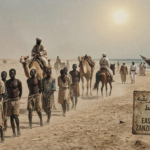 The Slave Trade’s Lesser‐Known Routes: From East Africa to the Middle East
Uden for Atlanterhavet: Den Indiske Oceans Slavehandel
 The coastal forts of East Africa: guardians of the Indian Ocean trade
I udkanten af Mombasas gamle by, hvor den indiske oceanbrise bærer duften af nelliker og salt, rejser Fort Jesus sig fra koralsten som en fire århundreder gammel vagtpost. Bygget af portugiserne i…
- The Slave Trade’s Lesser‐Known Routes: From East Africa to the Middle East
Uden for Atlanterhavet: Den Indiske Oceans Slavehandel